Via: Redefining Wearable AI Avatars

1. Product Overview and Next-Generation Cognitive Interface
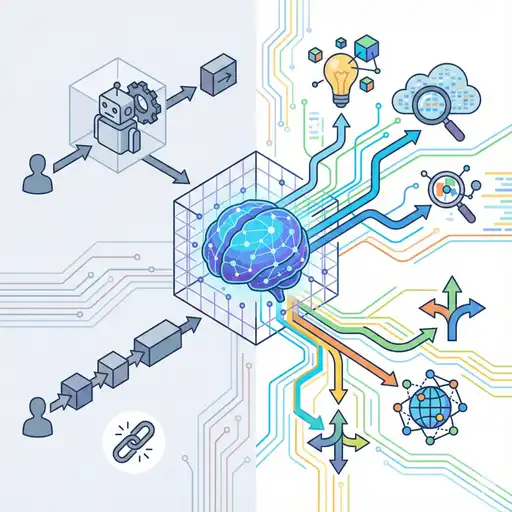
Via is a groundbreaking smart wearable system designed to address information overload and data privacy issues in modern life. Conventional tools often fail to capture the rich contextual details of our daily experiences, leading to the loss of vital life data. Moreover, the multitude of unstructured decisions encountered every day significantly reduces decision efficiency. To overcome these challenges, Via integrates automated multi-modal recording, digital twin prediction, and decentralized data governance (DAO) to build a comprehensive smart ecosystem with core advantages including:
Automated Multi-Modal Recording and Deep Analysis
By leveraging high-precision sensors to capture images, audio, environmental data, subtle facial expressions, and physiological signals, advanced AI algorithms automatically generate an immersive diary that ensures every moment is well documented.Digital Twin and Chain-of-Thought Predictions
Combining individual behavioral data with large-scale community trends, our chain-of-thought model continually accumulates and calibrates future scenarios. This approach provides users with multi-level decision support—from optimal traffic routing and work scheduling to personalized health planning.Decentralized Data Governance and Fair Compensation
Utilizing public blockchain or Holochain/IOTA Tangle architectures for immutable storage and DAO (Decentralized Autonomous Organization) governance, Via ensures that users maintain full data sovereignty and receive equitable benefits when sharing their data and services.
2. Core Values and User Pain Points
2.1 Pain Points (Problems)
Limited Recording Capabilities
Traditional recording methods cannot automatically capture the subtle changes in the environment or the nuances of facial expressions. Studies show that the human brain forgets up to 92% of critical environmental details every day, making it challenging to preserve important memories.Decision Overload and Inefficiency
In today's fast-paced environment, users face an average of 37 unstructured decisions per day. This overwhelming decision load increases cognitive stress and causes many optimal choices to be overlooked.Data Sovereignty and Privacy Risks
Centralized platforms control over 94% of user behavioral data, leaving individuals with little control over their own information and exposing them to significant privacy risks.
2.2 Opportunities
Automated Recording and Multi-Modal Analysis
By integrating data from a variety of sensors, Via automatically captures images, audio, and emotional cues to generate a fully automated, in-depth diary—ensuring that life's details are comprehensively recorded.Individual and Collective Behavior Prediction
Utilizing digital twin technology and chain-of-thought models, the system dynamically forecasts future behaviors, providing optimized recommendations for transportation, health, work, and more.Integration of Offline and Online Data
Merging real-world environmental information with online consumption records builds a holistic personal data repository that underpins robust decision-making support.
2.3 Delights
Immersive Diary Review Experience
With VR/AR technology recreating past scenarios and multi-media content presentation, users can relive memories in a vivid, lifelike manner.Precise Personalized Decision Support
Real-time decision recommendations based on behavior patterns and risk assessments reduce decision fatigue and enhance overall efficiency.Fair and Transparent Data Sharing Mechanism
Users can opt to share their data with third parties—such as advanced fitness coach AI or mental health consultant AI—and receive appropriate rewards via the DAO mechanism, enabling a mutually beneficial ecosystem.
3. Neuromorphic Hardware Design
Via employs stylish, lightweight, and highly extensible wearable devices that complement one another to form a complete system for data capture and real-time analysis:
| Device Type | Core Sensors and Technologies | Main Functions and Highlights |
|---|---|---|
| Via Glasses | High-resolution camera (supports HDR, night vision, wide-angle, and macro); built-in GPS, accelerometer, and Quantum Vision Photon Chip LiDAR | Real-time environmental analysis, polarization field sensor and multi-dimensional spatial modeling to capture subtle changes. |
| Via Pendant | 512-channel EMG (electromyography) sensors, quantum gyroscope, microphone, and voice interface | High-precision health monitoring and micro-motion detection (accuracy up to 0.01mm), ideal for on-the-go recording. |
| Via Wristband | Physiological sensors (heart rate, blood oxygen, body temperature, sleep, and stress), 3nm Bio-Photon Chip, and picometer-grade strain gauges | Real-time health monitoring and behavior capture, working synergistically with other devices for comprehensive data collection. |
All devices are equipped with edge computing modules supporting 5G/6G, Wi‑Fi 6/7, and Bluetooth 5.4 adaptive communications, and are designed for ultra-low power consumption to ensure long battery life and high reliability.
4. Technology Architecture and Core Algorithms
Via employs a synergistic model of Edge Computing + Cloud Quantum Computing + Decentralized Blockchain Governance, integrating advanced algorithms to ensure precision and efficiency from data acquisition to decision-making. Below is a detailed explanation of how each theory is implemented in the product:
4.1 Multi-Modal Data Collection and Pre-Processing
High-Dimensional Propensity Score (hdPS)
Implementation:
hdPS automatically filters and adjusts for confounding factors among vast covariates, extracting stable, unbiased data from both offline environmental inputs and online consumption records. This ensures that subsequent behavior predictions and decision-making are built on a solid, denoised data foundation.Emotion Analysis:
Facial Action Coding System (FACS) with Single Shot MultiBox Detector (SSD)
Implementation:
FACS analyzes subtle changes in facial muscle movements, while SSD quickly detects and identifies facial features. This combination captures real-time emotional variations and integrates these emotional data into the diary records.Fuzzy Adaptive Resonance Theory (FuzzyART)
Implementation:
FuzzyART classifies and clusters input data from sensors such as GPS, temperature, pressure, acceleration, and brain waves. This process effectively reduces noise in environmental and physiological data and creates initial context clusters that provide a precise background for subsequent decision predictions.Spiking Neural Network (SNN)
Implementation:
Deployed at the edge, SNN rapidly detects abnormal events (e.g., falls or emergencies) within milliseconds and immediately triggers alerts or initiates emergency protocols.
4.2 Quantum-Enhanced and Neural Computation
Quantum Neural Network (QNN)
Implementation:
QNN leverages the superposition and entanglement properties of quantum bits to extract features and analyze multi-modal data in higher dimensions, significantly enhancing computational efficiency and accuracy for real-time decision support.Brain-Inspired Computing (BIC) and Reinforcement Learning (RL)
Implementation:
By combining brain-inspired computing with reinforcement learning, the system simulates dynamic user behaviors and continuously optimizes predictions through feedback mechanisms, enabling real-time behavior forecasting and scenario simulation.Variational Quantum Autoencoder (VQAE)
Implementation:
VQAE learns the latent representations of diary data and generates diverse, coherent new data. This ensures that the diary content is rich and creatively predictive of future scenarios.Quantum Self-Attention Transformer (QSAT)
Implementation:
QSAT focuses on extracting key features from massive datasets, ensuring that the model prioritizes the most critical information for precise behavior prediction and decision-making.Faster R-CNN and Long Short-Term Memory (LSTM)
Implementation:
Faster R-CNN extracts spatial features from images, while LSTM processes time-series data to capture evolving behavior patterns and events, enabling accurate identification and prediction of dynamic scenarios.
4.3 Behavior Pattern Detection and Decision Generation
Adaptive Neuro-Fuzzy Inference System (ANFIS)
Implementation:
ANFIS combines fuzzy logic with neural network techniques to learn from historical data and predict future behavior patterns, offering personalized decision support.Quantum-enhanced Optimization
Implementation:
In conjunction with ANFIS, quantum-enhanced optimization performs a global search under multiple constraints (such as traffic routing, work scheduling, and health planning) to provide the best possible action recommendations.Risk and Reward Dynamic Evaluation (Based on Bayesian Network or Quantum Bayesian Update)
Implementation:
Using a Bayesian Network or its quantum counterpart, the system dynamically assesses the risks and rewards associated with various decision options, offering alternative solutions to help users make informed choices in a changing environment.Behavior Pattern Detection and Subscription Recommendations
Implementation:
By integrating consumption data, health monitoring, and emotional states, the system automatically identifies user behavior patterns and recommends the most suitable subscription services or products, reducing decision fatigue and enhancing quality of life.
4.4 Distributed Computing and Data Governance
Federated Learning
Implementation:
Raw data remains on the user's device while only model parameters are uploaded to the cloud for collaborative learning. This protects data privacy while leveraging large-scale distributed data to improve model accuracy.Blockchain Storage and DAO Governance
Implementation:
Using public blockchain or Holochain/IOTA Tangle architectures, all diary entries and analysis results are stored immutably. DAO mechanisms facilitate transparent decision-making and equitable economic rewards for data sharing.Homomorphic Encryption and ZK-SNARK
Implementation:
Homomorphic encryption allows AI training and inference to be conducted on encrypted data without decryption, while ZK-SNARK ensures that external computations do not expose user privacy.Adaptive Differential Privacy
Implementation:
Within the federated learning framework, the system dynamically adjusts noise injection to balance model accuracy with the protection of individual privacy.
5. Application Scenarios and Ecosystem
5.1 Passive Diary and Immersive Review
Automated Recording and Multi-Modal Diary Generation
Multiple sensors simultaneously capture images, audio, environmental data, facial expressions, and physiological signals. AI automatically generates an immersive diary that comprehensively records every moment.Emotion Tagging and Scenario Replay
By accurately recognizing facial expressions using FACS and SSD, and clustering sensor data with FuzzyART and processing events with SNN, the system uses VR/AR technology to recreate past scenarios, making memories vivid and lifelike.
5.2 Digital Twin and Action Decision Support
- Individual and Collective Behavior Prediction
Utilizing digital twin technology combined with large-scale community data, the chain-of-thought model dynamically simulates future developments, providing users with multi-level decision support ranging from traffic routing to personalized health plans. - Digital Twin
The system creates a dynamic digital twin in the cloud for each user, continuously updating individual behavioral models while leveraging collective data to predict and assist with the next steps. - Dynamic Scheduling and Health Optimization
Based on the user's emotional state, stress levels, and surrounding environmental information (e.g., traffic, weather), the system provides real-time itinerary planning and health advice (such as rest reminders or exercise suggestions). - Consumer and Financial Decision Support
By analyzing images, ambient sounds, and invoice data to understand consumption habits, the system conducts price comparisons and subscription package analyses, providing financial risk assessments when needed. - Collective Behavior Patterns and Chain-of-Thought Analysis
Leveraging historical community data to identify behavior trends, the system cross-references individual future actions with overall trends, enabling decision support that operates on both individual and macro levels.
5.3 Decentralized Data Sharing and Personalized Service Exchange
- DAO Data Governance
Users can opt to share their sensor and diary data with third parties and participate in data governance and voting through DAO mechanisms, ensuring transparency and fairness. - Personalized Service Exchange
Under privacy-preserving conditions, the system can connect users with external applications (such as shopping platforms, financial advisors, or mental health AI) in exchange for tokens or mutual benefits, maximizing data value. - Cross-Platform Integration
Open APIs and modular development interfaces enable third parties to integrate offline environmental information with online consumption records into various vertical applications, expanding the ecosystem's reach.
6. Security, Privacy, and Compliance Assurance
Via employs top-tier security technologies from the device to the cloud to ensure user data safety and privacy:
- Blockchain Storage and Immutable Technology
All diary entries and decision records are stored on public blockchains or Tangle architectures, ensuring that data is immutable and fully traceable. - Homomorphic Encryption and ZK-SNARK
These technologies allow AI training and inference to be performed on encrypted data while preventing external parties from accessing user privacy during computations. - Adaptive Differential Privacy
Within the federated learning framework, noise injection is dynamically adjusted to achieve an optimal balance between model accuracy and individual privacy protection. - Multi-Layered Protection Architecture
From the terminal device through edge computing to the cloud, advanced technologies such as Trusted Execution Environments (TEE) and Quantum Key Distribution (QKD) are employed, ensuring compliance with global privacy regulations such as GDPR and CCPA.
7. Conclusion
Via is not just a wearable smart diary and digital twin device; it is a revolutionary smart ecosystem that integrates automated recording, multi-modal analysis, individual and collective behavior prediction, and decentralized data governance. Through quantum-enhanced neural networks, digital twin simulations, chain-of-thought reasoning, and DAO governance, Via delivers comprehensive smart services—from permanent memory preservation to dynamic decision support—realizing a future where "memory becomes a programmable protocol and decisions transcend time and space."
The diary of the future isn't just written—it's intelligently recorded.
Future decisions won't be made on impulse, but through precise big data behavior analysis.
When every detail of life is automatically captured and deeply analyzed, and individual predictions merge with collective wisdom, the future will be an era of data-driven, precise decision-making.
Via—your digital partner that understands you better than anyone.